Macromolecular Crystallography
From a revolution to an evolution: hybrid-pixel detectors keep evolving with the needs of macromolecular crystallography. From synchrotrons to laboratories, and from low to high X-ray energies, there is a solution at hand.
In 2008, structural biology met the first PILATUS detector and paved its way to success. Fast data collection, fine phi-slicing, and vastly improved detection of weak and anomalous signals became possible due to a combination of detector's technical features. Absence of detector background, high spatial resolution, a wide dynamic range, and large active area were all packed into reliable and robust detectors.
Back then, it was a revolution; today, it is an evolution. Increased flux at synchrotron sources has enabled serial crystallography, while high-energy beamlines are utilizing hard X-rays to collect more data with less radiation damage. Thanks to the integration of hybrid-pixel detectors, laboratory diffractometers are pushing the limits of what you can achieve with your in-house instrument and what requires synchrotron beamtime.
EIGER2 are the next step in the evolution of HPC detectors: smaller pixels; a shorter readout; a higher count rate, wider dynamic range, and a high quantum efficiency for a wide range of X-ray energies, including hard X-rays.
- ✓ Improve spot separation and reduce background overlap thanks to smaller pixels.
- ✓ Perform simultaneous, accurate measurements of very strong and weak intensities thanks to the detectors’ superior dynamic range.
- ✓ Obtain faster measurements with: simultaneous read/write, a higher frame rate, larger detectors, and a larger region of interest.
- ✓ Measure efficiently at high X-ray energies with CdTe detectors for reduced radiation damage and high resolution
Macromolecular Crystallography at Synchrotrons
- ✓ Ultra-fine phi-slicing; in meso and serial crystallography with shutterless data collection, negligible dead-time or a continuous readout.
- ✓ Reduce radiation damage by taking high-energy measurements with CdTe-based detectors.
- ✓ Detectors for 4th-generation synchrotrons offer a high count rate and stable operation.
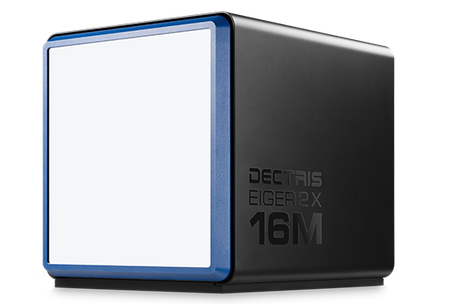
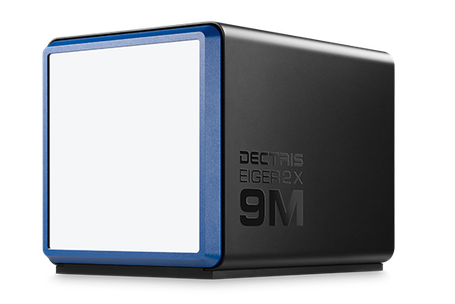
Most Frequently Used Products at Synchrotrons
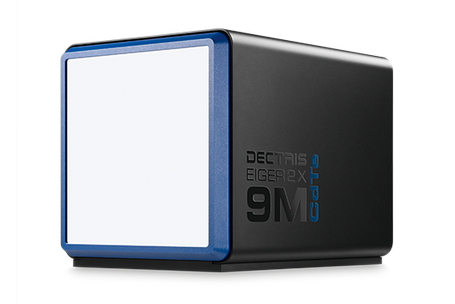
Macromolecular Crystallography with Laboratory Diffractometers
- ✓ Take advantage of small pixels and direct detection for better spot separation, less background overlap, and better data.
- ✓ Use ultimate dynamic range and take accurate measurements of strong and weak intensities thanks to true single-photon counting.
- ✓ Obtain wide angular coverage with large-area detectors.
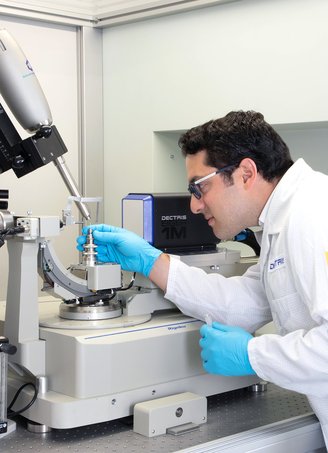
Most Frequently Used Products in Laboratory Diffractometers
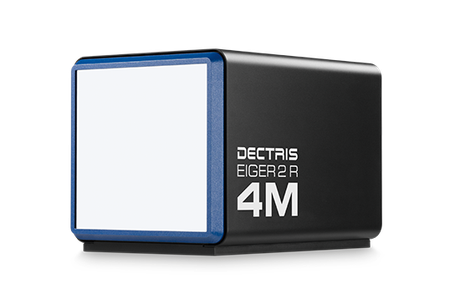
EIGER2 R 4M
Read more →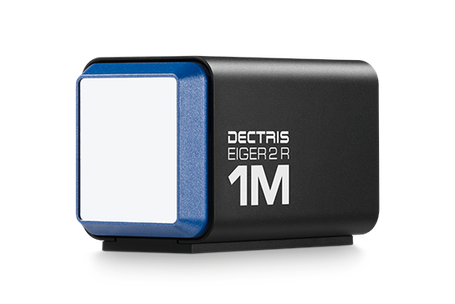
EIGER2 R 1M
Read more →Our Application Experts


Featured Publications
 Related News
Want to find out more?
Are you curious about X-ray science, or about choosing the right detector or instrument? Are you making your own X-ray machine?
Contact usCollaborate with us!
Do you have a project in mind? We look forward to hearing about it!
Reach out to us!