PILATUS4 for Laboratories
 Powered by Bioz
PILATUS4 R detectors enable fast data collection, thanks to their large active area and high quantum efficiency.
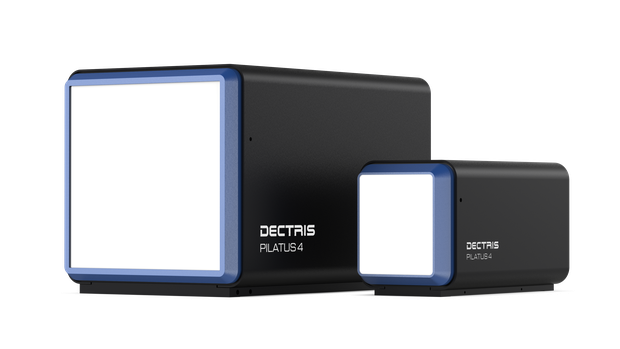
With their high quantum efficiency (greater than 95%) and their large active area of up to 155 x 162 mm, PILATUS4 R CdTe detectors enable fast data collection using any X-ray source from Cu to In. In particular, for Mo, Ag, and In radiation, PILATUS4 R CdTe outperforms any HPC detector with a Si sensor – even PILATUS3, which has the thickest Si sensor available. And for instruments that primarily use Cu or Ga radiation, our PILATUS4 detectors with Si sensors deliver the same great performance.
A dynamic range spanning ten orders of magnitude is achieved through PILATUS4’s superior count rates and the absence of any detector background. Internal frame rates of up to 200 Hz improve the count-rate correction and ensure highly accurate measurement of strong intensities. With four energy-discriminating thresholds, PILATUS4 offers new possibilities in Laue diffraction and spectral imaging.
- ✓ Large & efficient: Active areas of up to 155 x 162 mm, with more than 95% quantum efficiency
- ✓ High dynamic range thanks to zero detector background, superior count rates, and simultaneous read/write.
- ✓ Versatile: High quantum efficiency from Cu to In; four energy-discriminating thresholds for polychromatic applications
Publications
PILATUS4 R Detectors*
PILATUS4 R 1M | PILATUS4 R 260K | PILATUS4 R CdTe 260K-W | |
|---|---|---|---|
Active area | 155.0 x 162.0 | 77.0 x 79.5 | 155.0 x 38.3 |
Pixel array | 1033 x 1080 | 513 x 530 | 1033 x 255 |
Pixel size | 150 x 150 | ||
Energy range | CdTe: 8 - 25 | CdTe: 8 - 25 | CdTe: 8 - 25 |
Number of energy thresholds | 4 | ||
Threshold range | CdTe: 4 - 30 | CdTe: 4 - 30 | CdTe: 4 - 30 |
Count rate | CdTe: 5.0 * 106 | CdTe: 5.0 * 106 | CdTe: 5.0 * 106 |
Frame rate | 10 | 100 | 100 |
Readout time2 | Continuous readout | ||
Sensor material | Cadmium telluride (CdTe) or | Cadmium telluride (CdTe) or | Cadmium telluride (CdTe) |
Sensor thickness | CdTe: 1000 | CdTe: 1000 | CdTe: 1000 |
Point-spread function (FWHM) [pixels] | 1 | ||
Dimensions | 235 x 237 x 372 | 114 x 133 x 242 | 192 x 92 x 277 |
Weight | 15 | 4.7 | 4.7 |
FULL TECHNICAL SPECIFICATIONS AND USER DOCUMENTATION.
*All specifications are subject to change without notice.
1 With optional calibration for an extended energy range.
2 The effective dead time between exposures is < 100 ns (max. loss of 1 count/pixel).
Key Contact

Related Documents
Related products
Techniques
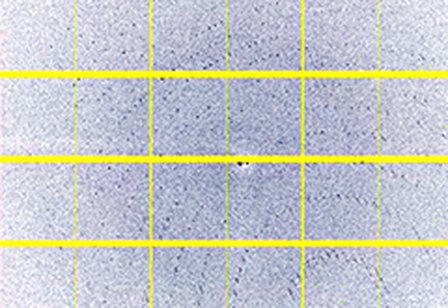
X-ray diffraction
Patterns with both weak and intense reflections are no challenge for the high dynamic range of DECTRIS strip detectors.
Read more →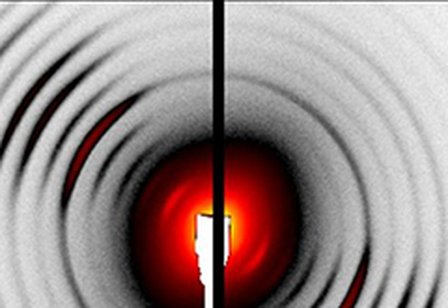
Scattering
Scattering techniques, such as SAXS/WAXS, greatly benefit from our detectors’ fast frame rates and outstanding signal-to-noise ratio.
Read more →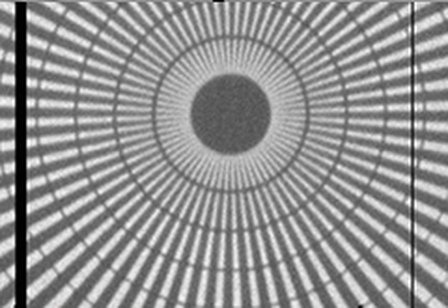
Imaging
The multiple thresholds of DECTRIS detectors enable spectral sensitivity for medical and industrial analytical instruments.
Read more → Related News
Request a quote
To get more information for a tender or learn more about purchasing a DECTRIS PILATUS4® X-ray detector for your laboratory, reach out to us
Collaborate with us!
Need a DECTRIS hybrid-pixel photon-counting detector integrated into your analytical instrument? Just reach out to us!
Contact usWant to know more?
We are happy to answer any questions about us, our detectors, or the process of integrating our detectors into your experimental setup.
Contact us